
Currently Empty: $0.00
Medial Tibial Stress Syndrome – Shin Splints
$119.00
-
Record date: May 31, 2022
Length: 34 minutes
No CEUs
Includes lifetime access
Medial tibial stress syndrome, commonly known as shin splints, is a repetitive stress injury frequently seen in runners, jumping athletes, and other active patients. Effective treatment requires more than simply addressing the painful area—it requires understanding the anatomical, biomechanical, and functional factors contributing to the condition.
In this 34-minute webinar, Dr. Anthony Lombardi examines the anatomy and pathophysiology of medial tibial stress syndrome, including the role of the periosteum and the muscles of the anterior, posterior, and lateral compartments of the lower leg. He explains how repetitive loading, overtraining, foot structure, muscular inhibition, and altered lower-extremity biomechanics can contribute to anterior and posterior shin pain.
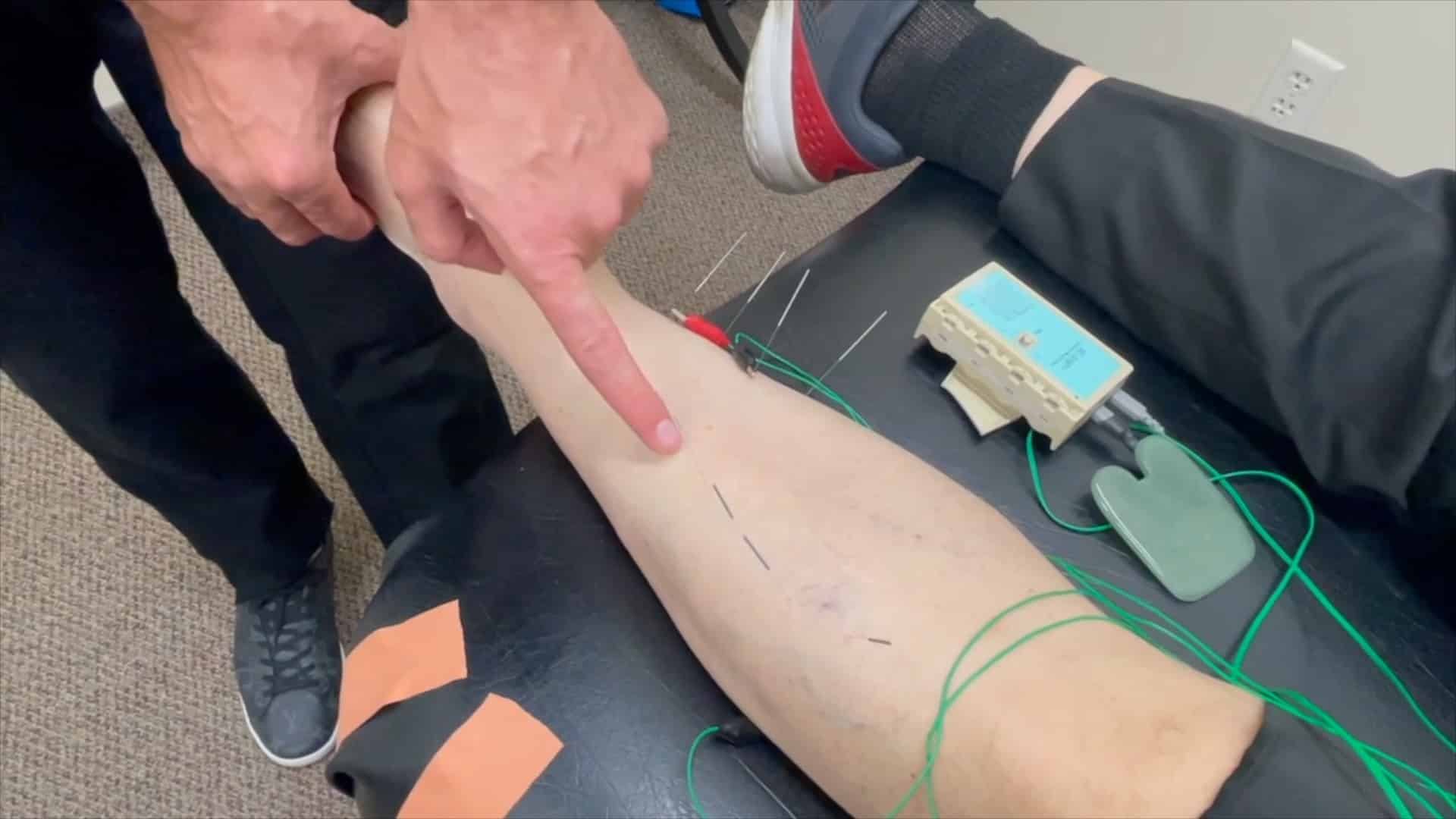
The course also includes a practical demonstration of assessment and treatment approaches. Participants will see techniques involving acupuncture and electrical stimulation, gua sha, supportive taping, and biomechanical correction. Particular attention is given to identifying pes planus and pes cavus and understanding how each may alter loading through the tibia and surrounding musculature.
This focused presentation provides clinicians with a practical framework for identifying contributing factors and developing a more complete treatment strategy for patients presenting with shin splints.
Upon completion of this course, participants will be able to:
- Describe the anatomy and pathophysiology associated with medial tibial stress syndrome.
- Identify the primary muscles and lower-leg compartments that may contribute to anterior and posterior shin pain.
- Explain how repetitive loading, overtraining, footwear, training surfaces, and lower-extremity biomechanics may contribute to shin splints.
- Differentiate how pes planus and pes cavus can affect the anterior and posterior compartments of the lower leg.
- Recognize the relationship between lower-extremity injuries and muscular inhibition higher in the kinetic chain.
- Apply clinical treatment strategies including acupuncture, electrical stimulation, gua sha, ice massage, and supportive taping.
- Identify situations in which footwear modification, bracing, orthotics, or referral for biomechanical correction may be appropriate.
About the presenter:
Dr. Anthony Lombardi Is A 2002 Graduate Of The New York Chiropractic College In Seneca Falls, New York And Completed The McMaster Contemporary Medical Acupuncture Program In Hamilton, Ontario. He Founded The Hamilton Back Clinic In 2002 And Has Since Become A Private Consultant To Athletes In The NFL, CFL, And NHL. Dr. Lombardi Has Accumulated Some 190,000 Treatments Over The Past 22 Years Of Practice.
In Addition To Practicing, Dr. Lombardi Was Also An Instructor In The Contemporary Medical Acupuncture Program At McMaster University From 2004 To 2013. In 2010 He Developed EXSTORE™, An Organized System Of Assessment And Treatment That Produces Fast Results Using Motor Points, Electro-Acupuncture, Soft Tissue Work, And Other Modalities. Dr. Lombardi Has A Library Of On-Demand Education That Continues To Grow, With Some 75 Webinars Available Covering A Variety Of Musculoskeletal Conditions And Practice Management Topics. He Also Teaches His EXSTORE™ System Through Live, In-Person Seminars Throughout The U.S. And Canada.
Dr. Lombardi maintains a Busy Practice, Averaging 170 Patient Visits A Week, Including 12 New Patients Every Week, For Over Ten Years.
Reviews
There are no reviews yet.