Course Description
Pelvic floor dysfunction is one of the most overlooked contributors to pain, impaired performance, and incomplete recovery in athletes. High-impact loading, heavy lifting, rapid cutting mechanics, cycling posture, and sport-specific movement strategies can all overload the pelvic floor, causing symptoms such as urinary leakage, urgency, pelvic pain, groin pain, hip dysfunction, and reduced power output.
This groundbreaking 2-day seminar brings together two experts at the top of their fields to deliver the most comprehensive, sports-specific pelvic floor training available.
Dr. Jamie Hampton, DAOM, L.Ac. leads participants through detailed anatomy, pathology, symptom reproduction, pelvic floor screening, and dry needling techniques tailored for active populations. Her extensive clinical experience brings nuance and specialized insight into treating pelvic floor disorders.
Dr. James Werner, DC, M.Sc. (Sports Med), CSCS, Director of Rehabilitation at Tread Athletics, teaches how pelvic floor dysfunction presents in sport, alters movement mechanics, and impacts performance. He demonstrates how hip, core, and lumbopelvic dysfunction integrate with pelvic floor disorders and how to correct movement patterns to prevent recurrence.
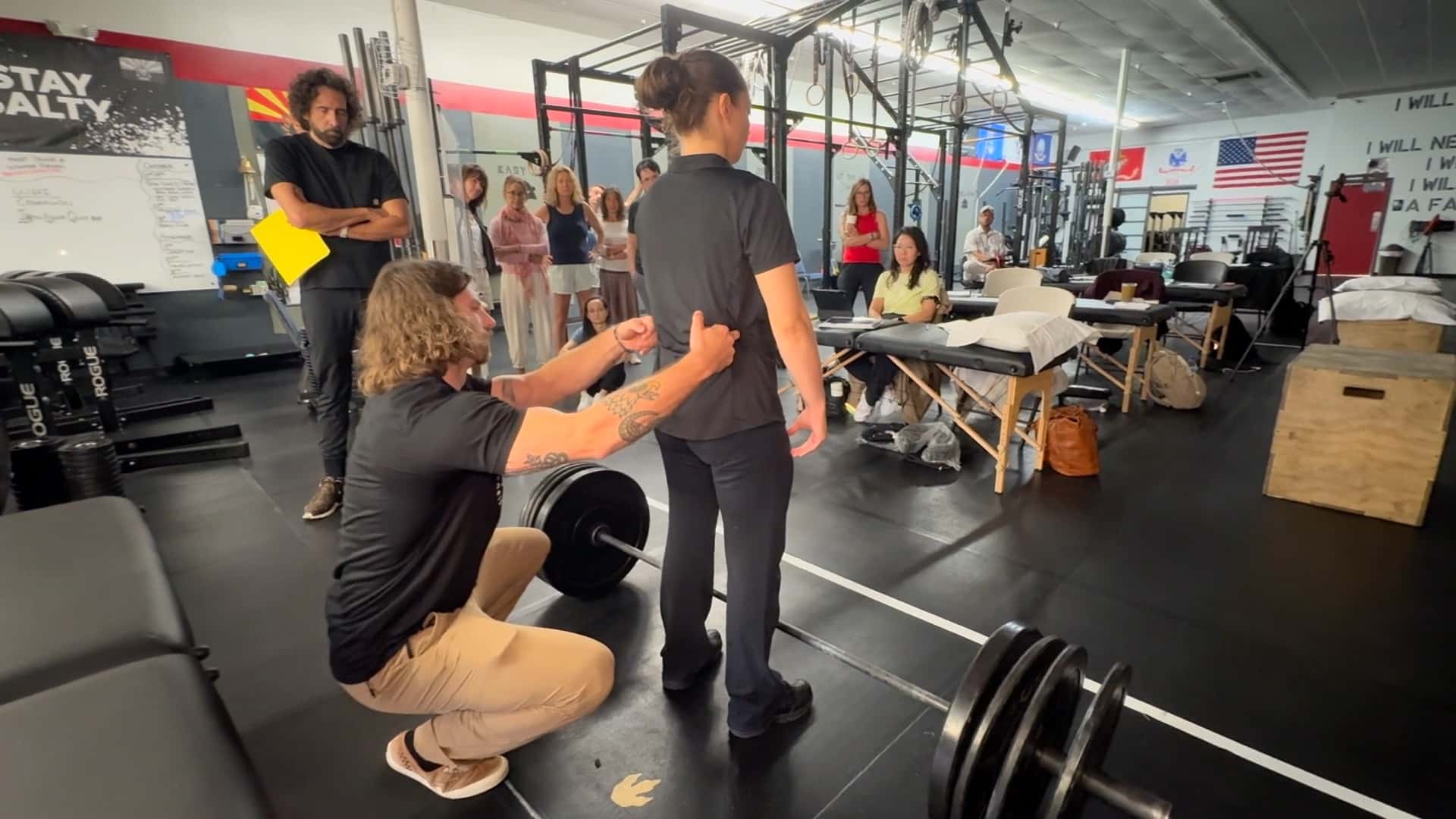
Participants will first complete prerequisite video lectures covering pelvic floor anatomy, epidemiology of pelvic floor dysfunction in athletes, sport-specific loading patterns, and movement-based symptom reproduction. The in-person seminar is highly hands-on and taught in a CrossFit gym environment to train clinicians in assessment, movement analysis, pelvic floor screening, and dry needling techniques.
This course bridges the gap between pelvic floor therapy, orthopedic sports medicine, and performance rehabilitation, giving clinicians the tools to recognize, assess, and treat pelvic floor disorders in athletes of all levels.
*Participants will needle each other during the lab portions.
DAY 1 — SATURDAY (9:00 AM – 5:30 PM)
9:00am-10:00am: Pelvic floor acupuncture & Dry Needling Quick demo, then hands-on practice
Approaches to Athletes
-Muscles/structures to check
-Demos and palpation: emphasizing tissue quality
10:00am-11:00am: Pelvic floor acupuncture & Dry Needling – demos + practice
-Adductors
-Obturators
-Pubic Symphysis
-ACL
-Perineum
-Estim
11:00am-12:00pm: Pelvic floor acupuncture & Dry Needling – demos + practice
-Bulbospongiosus
-Ischiocavernosus
-Other muscles/points for treating specific conditions
12:00pm-1:00pm Lunch
1:00pm-2:00pm: Squatting– Lecture / Demo / Lab
Video demos of squatting – High level athletes doing said movement
-Sports examples
-Bandwidth of what would be appropriate
-Would have group repeat movements to see what trained eye can pick up
-Go into how certain muscles might be affected.
-Quick intro of what next steps would be
Movement screen – Global Joint by joint assessment – example:
- Issues with stabilizing a knee? Or big hip shift? Hip and groin screening
- Foot very unstable? Foot and ankle and look upstream
- Long eccentric window – hip and groin has to withstand a lot of forces in jumping and moving
- Look at hip strength, ROM is big and takes them a long time to get out, probably going to be strength issue.
- Short ROM but can’t stop it, isometric intervention
- Weak overall, then just need to get stronger.
- Bodyweight → loaded
- Squat patterning determines loading- Barbell vs KB/DB, Front vs Back Squat, High vs Low bar, Heel elevated vs flat
- Utilizing tempos
- Bracing assessment
- Pelvic & other muscles commonly injured/affected
2:00pm – 2:30pm | Deadlifting – Lecture / Demo / Lab
Video demos of deadlifting – High level athletes doing said movement
Movement screen & Progression
- Bodyweight → loaded
- Deadlift patterning- set up, initial pull, lockout
- Hip hinge variations- bi vs unilateral, bi loading vs unilateral hand loading vs hip loaded, barbell vs trap bar vs kb/db, ROM
- Bracing assessment
- Tempos
- Pelvic & other muscles commonly injured/affected
2:30pm – 4:00pm PM | Jumps & Sprints
Sports examples – Sprinting & Jumping
Global assessment:
- Long eccentric window – hip and groin has to withstand a lot of forces in jumping and moving
- Look at hip strength, ROM is big and takes them a long time to get out, probably going to be strength issue.
- Short ROM but can’t stop it, isometric intervention
- Weak overall, then just need to get stronger.
Progressions
- Drop jump series
- Lateral bounds
- Single-leg landings
- Real-time symptom reproduction & retest
- Couple exercises – to modify the exercise itself or prepare for tissue loading
- Treadmill run analysis
- Downhill step-downs – Secondary form of analysis
- Lunge matrix variations
- Cadence manipulation
- Pelvic & other muscles commonly injured/affected
4:00pm-5:30pm: Cycling & Endurance Sports Lab – Lecture / Demo / Lab
- Sports examples
- LDR – Submax
- On-bike assessment (trainer)
- Saddle pressure mapping
- Aero vs upright
- Hip flexion tests
- Pelvic & other muscles commonly injured/affected
DAY 2 — Sunday (9:00 AM – 3:00 PM)
9:00am – 10:00am | Field / Court Sports Lab – Lecture / Demo / Lab
- Sports example
- Cutting drills
- Change of direction
- Kicking/ block drills
- Sprint → deceleration mechanics
- Pelvic & other muscles commonly injured/affected
10:00am – 11:00am | Pelvic Floor Screen (External) – Lecture / Demo / Lab
Lumbopelvic & Abdominal Wall Assessment – Lecture / Demo / Lab
Diaphragm–Pelvic Floor Synergy – Lecture / Demo
- 360° breathing
- Rib stack
- Breath mechanics
- Submax bracing – 1 of the forms of introductory rehab
- TVA, obliques, phrenic nerve needling
Rib Orientation & Abdominal Integration – Lecture / Demo / Lab
- Ribs over pelvis
- Wall reach
- In office Rehab progression: ground -loaded
- Abnormalities in these = pelvic floor dysfx
- 1 approach is txt what you can then the PF comes along.
- Lab
- Txt
- May be based off of palpation
Breathing mechanics
- How much Voluntary contraction is needed
- Bearing down
- Relaxation
- Coordination with breath
- Lab
Txt – Soft tissue, Rehab
11:00am – 12:00pm | Hip & Groin Assessment – Lecture / Demo / Lab
- Adductor squeeze
- Pubic palpation
- Hip IR/ER
- Strength ratios (abduction vs adduction)
- Lab
- Txt
- Pelvic floor Jamie
- Half-kneeling drills, side lying, split stances,
Integrating Bracing + Movement – Lecture / Demo / Lab
- Hinges
- Squats
- Jumps
- Sport-specific drills
12:00-1:00pm: Lunch
1:00pm – 2:00pm: Foot and Ankle
- Tib post, peroneus longus, popliteus, FHL most common
- Implication to hip strength
- Structural flat vs functional flat
- Ground reaction forces
- Foot position – kinetic chain – to pelvic floor
2:00 – 3:00pm – Return to Sport Algorithm – Lecture
- No symptom reproduction
- Load tolerance
- Impact tolerance
- Fatigue resilience
3:00pm – 4:00pm – Final Q&A + Conclusion
- Final takeaways – coordinating with coaches
- Recommended progressions
- Resources
Instructor Bios
About Jamie Hampton, DAOM, L.Ac.
Dr. Jamie Hampton has been dry needling since 2006 and specializing in pelvic floor disorders since 2009. She is a doctoral graduate of The American College of Traditional Chinese Medicine, the oldest TCM school in the U.S. She has worked in leading San Francisco Bay Area hospitals for 18 years with an emphasis on integrated, collaborative care in fast-paced clinical settings including the ICU.
She served as an adjunct professor through the University of California, San Francisco, where she taught grand rounds to medical students. This led to a faculty position at the Acupuncture and Integrative Medical College in Berkeley, CA, where she taught advanced needling technique, gynecology, and formula writing. Her passion for teaching continues to shape her clinical and educational work.
Jamie was also co-founder of Golden Leaf Acupuncture in Berkeley, CA, a leading provider for UC Berkeley students, faculty, and staff. She currently practices in Albany, CA, specializing in pelvic floor and orthopedic care.
About James Werner, DC, M.Sc. Sports Med., CSCS
Director of Rehabilitation at Tread Athletics
James Werner is a chiropractor, acupuncturist, and rehabilitation specialist who works with athletes ranging from high school competitors to NHL players, Olympians, and MLB pitchers. His personal background as a high-level hockey player who experienced significant injuries inspired his career-long mission to help athletes return to peak performance.
At Tread Athletics, James plays a pivotal role in hands-on therapy, continuing education for the performance department, and development of rehabilitation protocols for remote and in-person athletes. His combined expertise in sports medicine, biomechanics, and dry needling makes him a leader in integrating pelvic floor considerations into athletic rehabilitation.